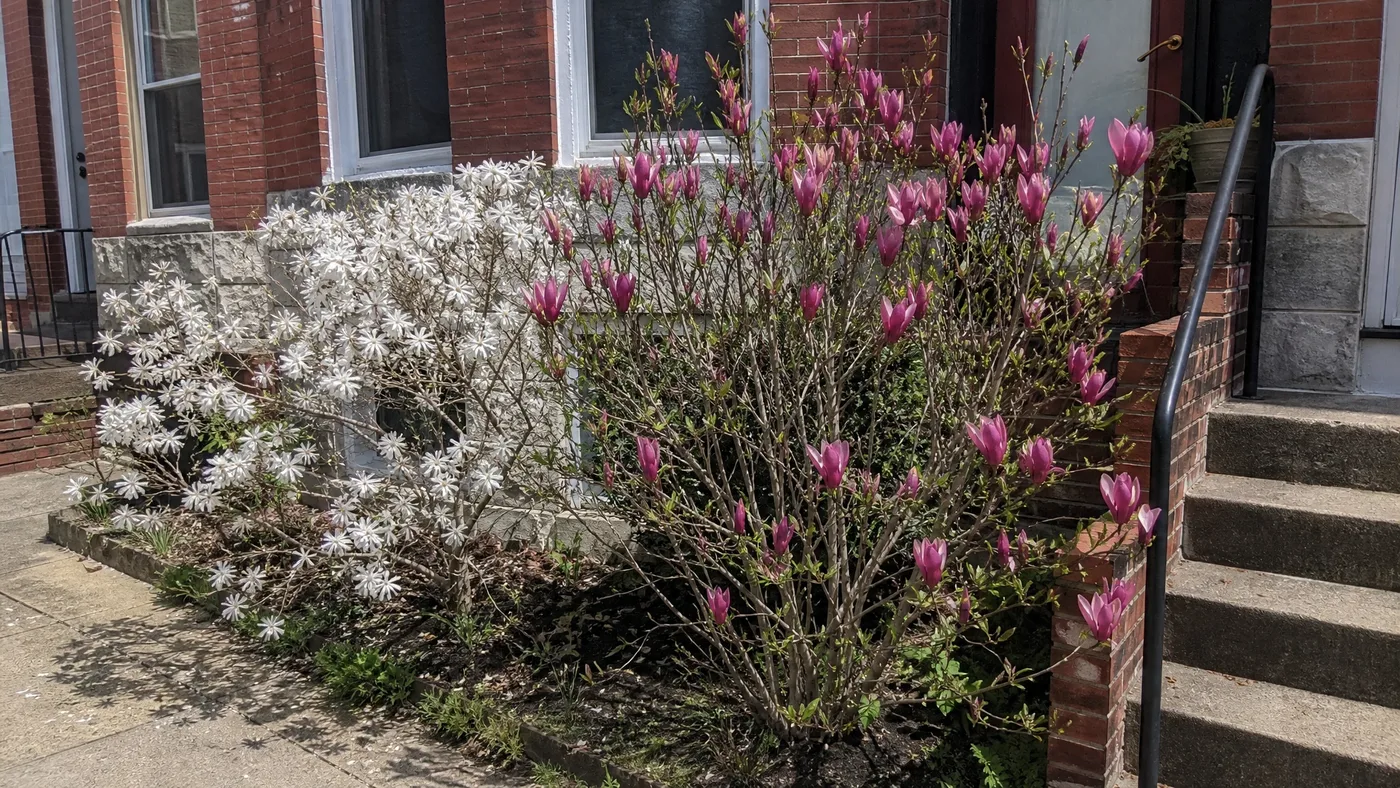
Jane Magnolia vs Royal Star Magnolia: Size and Bloom Time
Both plants end up on the same shortlist for the same small bed, and that is where the trouble starts. Royal Star runs about 10 feet tall and wide, Jane Magnolia reaches 10 to 15 feet by 8 to 12, and in catalog photos you could swear they were siblings. They are not, and the differences show up in early spring, not in the nursery pot.
One of them blooms first and pays for it when a hard night comes through. The other waits, and is less likely to lose its flowers. Pick wrong and you either watch brown petals hang off a shrub you bought for the show, or you wait three extra weeks for a bloom you wanted sooner.
In this article, we'll go through mature size, flower color and form, bloom timing and frost risk, and how the two compare on hardiness and soil. Then we'll give you a plain call on which one to plant.
Mature Height and Spread of Jane Magnolia and Royal Star
Set a young Royal Star beside a young Jane Magnolia in matching pots and you will need the tags to tell them apart. Give them a decade and a tape measure and the gap shows, though it is smaller than most people expect. Royal Star is a rounded deciduous shrub to about 10 feet tall and wide.
Treat that figure as a guide and ask your local extension service what to expect in your climate. Jane Magnolia matures at 10 to 15 feet tall and 8 to 12 feet wide, so the top end is 15 by 12. It is slow-growing, so reaching those numbers takes years. Our guide on how fast Jane grows and where it stops lays out the timeline.
The table below puts both cultivars next to the parent species, so you can see how far each one sits from the wild form.
| Plant | Mature height | Mature width | Source |
|---|---|---|---|
| Royal Star | about 10 ft | about 10 ft | |
| Jane Magnolia | 10–15 ft | 8–12 ft | NC State |
| Star magnolia (species) | 15–20 ft | 10–15 ft | NC State |
Which Fits a Tight Space Better
On paper, Royal Star. A shrub that stops near 10 feet in both directions needs a circle of about that size and nothing more. Jane Magnolia can match it at the low end of its range, but the top of its range adds 5 feet of height and 2 feet of width that Royal Star does not claim. Jane does best when pruned sparingly and only after flowering, so do not count on shearing it back to fit.
Our verdict is Royal Star for the tightest beds and Jane Magnolia when you can spare a patch around 10 feet by 8 or better. We often see people plant for the size of the pot and regret it later, so plan for the mature size and let the slow growth be a pleasant surprise.
Jane Magnolia Brings Purple-Pink, Royal Star Brings White
Picture a bare branch in early spring with nothing else in the yard awake yet. Royal Star puts out a spray of narrow white petals like a shaggy star, and Jane Magnolia puts out cups of purple-pink that hold their shape. Neither is subtle. Which one you call showier depends on whether you count petals or color.
Royal Star's Many-Petaled White
Royal Star has pale pink buds that open in early spring to white flowers about 5 inches across, with up to 30 narrow tepals. The species flowers are showy, fragrant, star-shaped and usually white, and Royal Star is the most common cultivar, with double white flowers and pink buds. That petal count is what gives it the shaggy, frilled look.
Jane Magnolia's Goblet Blooms
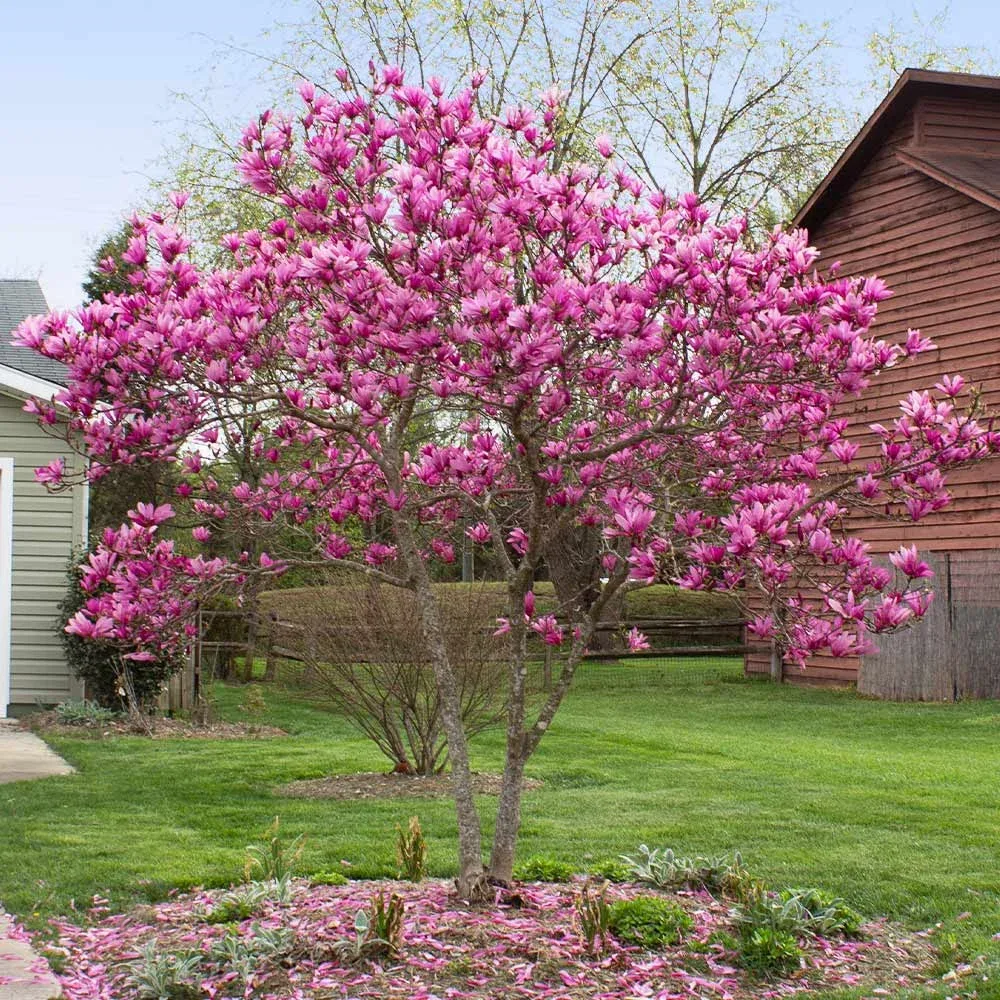
Jane's flowers are large, fragrant and purple-red, resembling tulips with white centers, and they cover the bare branches before the leaves emerge. Where Royal Star is a burst, Jane is a cup. A cupped flower reads as a solid block of color from across the yard, where a many-petaled star reads more like a cloud. Our guide to Jane's bloom time and color follows the flowers through the whole window.
Which Flower Is Showier
Jane Magnolia, in an ordinary year. White on a bare branch is lovely, but it fades into late snow or a pale house wall, and it is the flower most likely to be browned by a freeze. Royal Star wins on petal count and the pink-bud stage. Both are described as fragrant, so scent will not settle this one. If the Royal Star flowers escape the weather they are a fine thing, but we would back the one that shows up intact.
Bloom Timing and Why Jane Magnolia Dodges Frost
Star magnolias are early, and early is the whole problem. The species is the earliest of the deciduous magnolias to flower, opening in late winter to early spring before the leaves emerge, and since blooms open early, they are subject to frost damage. Royal Star shares the problem, since late frosts may damage its flower buds. A warm spell followed by a clear, cold night is all it takes.
One of the most common questions we get each spring is why a star magnolia's flowers turned brown overnight. Nearly every time, the answer is a hard frost arriving after the flowers had already opened.
Jane Magnolia's Built-in Delay
Jane flowers from mid-April to early May, which makes it late blooming. Its bloom comes about two to four weeks later than its parent species and therefore less likely to be damaged by frost. That delay is the point of Jane. The cross was made to get the star magnolia look without the star magnolia gamble.
Who Wins on Reliability
Jane, and it is not close. Later is not the same as immune, though, and the source says "less likely," not "never." A hard freeze in late April can still catch a Jane in bloom. You will hear that Royal Star can be rescued by planting it on the north side of a building to hold the buds back. We would rather pick the plant that is late by nature than ask a microclimate to do the job. Check your average last frost date with your local extension service and compare it to those bloom windows.
Parentage Behind Jane Magnolia and Royal Star Habits
The easiest way to understand these two is to look at their families. Royal Star is a selection from Magnolia stellata, a pure species line, so it behaves like the species: early, white and rounded. Jane is a cross between M. liliflora 'Reflorescens' and M. stellata 'Waterlily'. One side is a star magnolia, the other a purple-flowered relative.
We read the purple-red color and the later bloom as the liliflora side showing through. That is our reading, not a published breakdown, and other sources differ on the parentage, so do not be alarmed if a tag lists it a little differently. If you are also weighing Jane against its siblings, our Little Girl hybrids comparison covers that side of the family.
Vigor and Habit
Hybrid vigor sounds like a race, but Jane does not run. It is slow-growing, and its 10 to 15 foot height sits below the species' 15 to 20 feet. Royal Star is described as a rounded shrub and also stays below the species size. No source we rely on gives a growth rate for Royal Star, so we will not put a number on its vigor. What the sizes tell you is that both are tamer than the wild star magnolia, and Jane simply carries a bit more height and a different calendar.
Hardiness and Soil Tolerance Beyond the Flowers
Plants get chosen on flowers and then die or sulk on the soil, so this is the section that decides whether you still have a magnolia in five years. We will say up front that the sources we use tell us more about Jane than about Royal Star here, and we will not paper over that.
Zones and Cold
Jane grows in USDA zones 4a through 8b, and the star magnolia species covers the same 4a to 8b. Nothing in our sources moves Royal Star outside that range, so on growing zones it is a tie. Jane is also a particularly cold-hardy form. The real hardiness gap is not in the wood. A plant can be rated for a cold zone and still lose its flowers to a frost in April, which is the frost problem from the last section again.
Soil, pH and Sun
Jane is tolerant of heavy clay soils, air pollution and heat. It grows in both acid soil (below pH 6.0) and neutral soil (6.0 to 8.0), and it takes full sun, meaning 6 or more hours, as well as partial shade at 2 to 6 hours. That is a wide welcome. Our guide to soil drainage, pH and amendments for Jane goes further.
For Royal Star, the sources we rely on do not spell out soil or pH, so ask your local extension service before planting it in heavy clay. Heavy clay is where a lot of plant labels go to die. Verdict: Jane on tolerance, because it is documented, and Royal Star may well be fine but we will not promise it.
Choosing Between Royal Star and Jane Magnolia
What we tell customers is to decide on frost first, size second and color third. Frost is the one factor you cannot fix after planting, while size and color are things you can live with. Use the points below to match each plant to your site.
- Pick Royal Star if the bed is tight. At about 10 feet tall and wide, it is the smaller of the two on paper and fits spaces where Jane's upper range would not.
- Pick Royal Star if your last hard frost reliably comes before the buds swell and you want the earliest white flowers on the street. Check your local last frost date first.
- Pick Jane Magnolia if April still turns cold where you live, since it opens mid-April to early May, two to four weeks behind the species.
- Pick Jane Magnolia if your soil is heavy clay or you want purple-pink, because it tolerates clay and the color is the bolder of the two.
Our Call
For most of the customers who ask, we pick Jane. Royal Star is the better small-space shrub and the earlier flower, and in a sheltered garden with mild springs we would happily grow it. But a magnolia is a long-term plant, and one that loses its flowers every third spring is a poor trade for the weeks it gains.
A Dry Rule for Jane Magnolia and Royal Star
Royal Star is the smaller, rounder, earlier and whiter shrub. Jane Magnolia is a bit taller, deeper in color, two to four weeks later, and documented for clay, heat and a wide pH range. Both are listed for zones 4a to 8b, so the decision comes down to frost and room, not winter cold.
Pick Royal Star for early white and Jane Magnolia if you hate gambling on frost.
Jane Magnolia
Nursery-grown Jane Magnolia in sizes from 1 Gallon 1-2 Feet Multi Stem, shipped to your door.
From $80.55
Shop Now →Magnolia Jane sits in full sun on our farms, which is the light Jane prefers, so the Jane you choose has already lived the way you will ask it to. We are a small team of growers who tend top-quality shrubs and trees ourselves from start to finish. Once you have weighed Jane against Royal Star for size and bloom time, pick out a plant for your own garden.