Should You Grow Jane Magnolia as a Tree or Multi-Stem Shrub?
Ten years from now, what will you be pruning, paying for and looking at in 2036? Jane magnolia punishes a form chosen by accident. Plant it as a shrub where a tree was wanted and the stems crowd the walkway by year five. Train a trunk and then stop paying attention, and shoots keep rising from the base, so the plant slides back toward a shrub with a lopsided top.
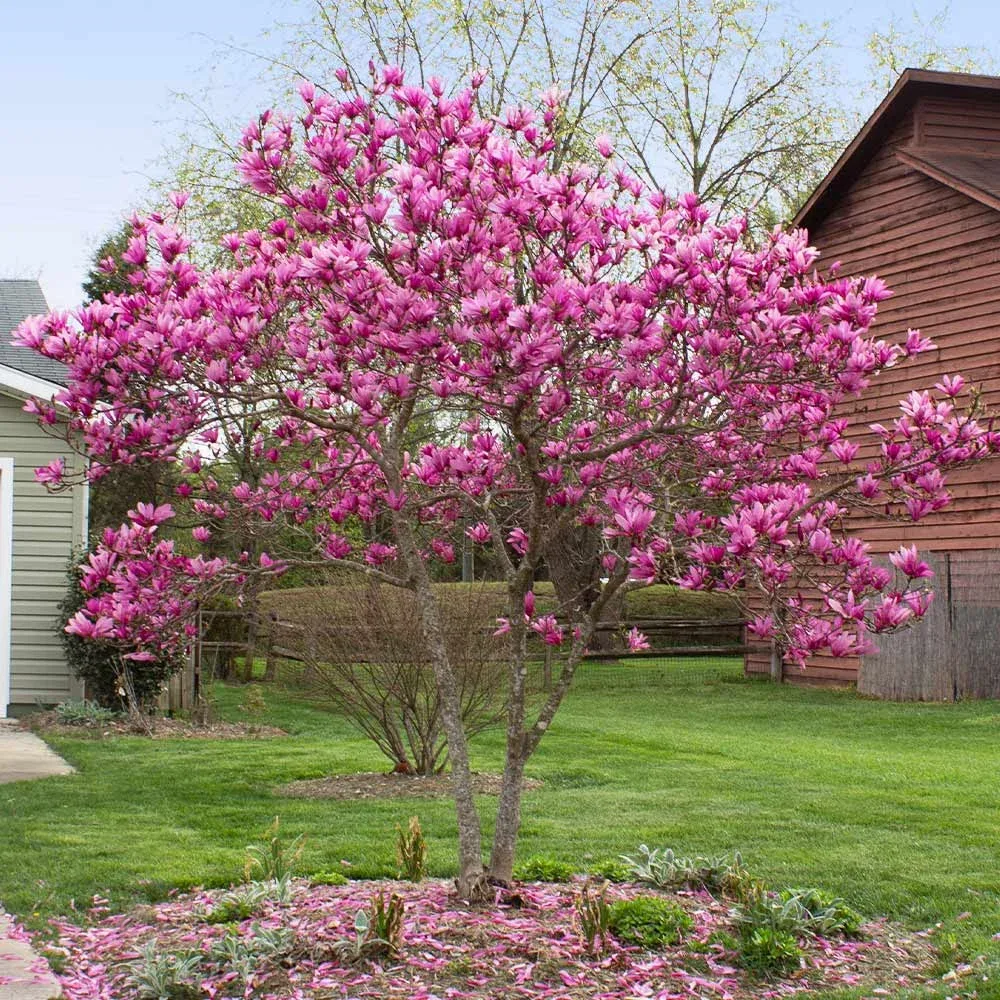
Both outcomes are avoidable, and the plant gives a lot back when the form fits the site: slender red-purple buds that open to fragrant, cupped white flowers from mid-April to early May, carried at a height you will actually enjoy.
Read on for how Jane grows when left alone, how a trunk and a multi-stem plant compare, whether to buy one trained or train your own, and what the yearly work and cost look like over a decade.
Deciding What Jane Magnolia Is for You
Start with the job, not the technique. Jane is a hybrid deciduous shrub or small tree with a compact habit, and it matures at 10 to 15 feet tall and 8 to 12 feet wide. That "or" is the decision in front of you. The plant will do either job, so your site and your patience have to settle it.
These are the roles we hear about most, and the form each one points to:
- A screen or border mass along a fence or property line wants many stems, because they give you fullness from the ground up.
- An entry or patio specimen that you walk beneath wants a single trunk, because a clear stem lets you see under the canopy and plant below it.
- A bed beside the house usually suits several stems, which soften a wall without leaving a bare trunk against it.
- A small lawn accent can go either way, but a trunk leaves the ground free for bulbs and groundcover. If pets use the lawn, the ASPCA rates star magnolia, a parent of Jane, as non-toxic to dogs, cats and horses, though that page does not cover Jane itself.
If you are still sketching the planting, our landscape ideas and companion plants guide shows how each shape sits in a bed.
Write your purpose as one line before you read further. A mass, a border or a backdrop means you are choosing a shrub. Something you walk under or sit beside means you are choosing a trunk.
How Jane Magnolia Grows Without Help
Left alone, Jane builds itself as a rounded, upright plant with several stems rising at or near the ground. It is slow-growing, reaching 15 feet tall and 12 feet wide at most. That slow pace matters more here than on a fast plant.
What the Plant Does on Its Own
No single stem takes charge. Jane came out of the Little Girl series at the National Arboretum in the 1950s, selected from M. liliiflora 'Reflorescens' crossed with M. stellata 'Waterlily', and it carries a compact, many-stemmed habit, which is why it is sold as a shrub "or small tree."
Because growth is slow, the shape you plant is the shape you live with for years. A crowded cluster of stems does not sort itself out. It simply gets thicker, and you decide how many to keep.
For the full growth timeline, see our guide on how big Jane gets and how fast.
Keep the Habit or Change It
Changing the habit means working against the plant every year, because its urge to send up new stems does not switch off once you have chosen a trunk. Keeping the habit means almost no structural work at all.
Our advice: keep the natural habit unless you have a clear spatial reason to change it. Changing it is a commitment of seasons, not an afternoon.
Choosing a Tree Form or Shrub Form
Space, effort and look decide this one. The table below sets the two forms side by side for a plant that finishes at 10 to 15 feet tall.
| Factor | Single trunk | Multi-stem |
|---|---|---|
| Ground space | Open beneath the canopy for underplanting | Stems and foliage reach the ground |
| Yearly pruning | Base shoots removed every summer | Occasional thinning, mostly dead or broken wood |
| If a stem is damaged | Losing the trunk means losing the whole top | Other stems carry on and fill the gap |
| Flower position | Held high, best seen from a distance | Spread from low to high, close to nose level |
| Time to the finished shape | Several years of steady work | Present from the day you plant it |
The look differs more than the numbers suggest. A multi-stem plant puts buds and flowers at nose height, which matters for a scented plant beside a path or window. A trunk lifts the same flowers into view above fences and shrubs but leaves less to smell at ground level.
Bloom timing is the same either way. The Little Girl series flowers two to four weeks later than its parent species, which helps both forms miss some early frosts.
One of the most common questions we get is whether a single trunk makes Jane "a real tree." It changes the silhouette, not the size. The plant still finishes inside the same 10 to 15 feet.
Our choice for most gardens is the multi-stem form. It costs less effort, tolerates injury better and starts looking right at planting. We would choose a trunk only where you walk beneath the plant or need the ground free.
Buying a Jane Magnolia Already Trained
A trained plant has already absorbed years of someone's attention, and that is what you pay the extra for. With a slow grower, those years run long, so buying trained saves real time. Starting small costs less up front but asks for those seasons of work from you.
If you buy trained, check the plant before you commit:
- One dominant, straight leader running from the base to the top, with no rival stem of similar thickness.
- Pruning cuts that are small and closing over, with no long stubs left where stems were removed.
- Branches spaced up the trunk rather than bunched at one height.
- No cluster of fresh shoots already regrowing at the base, which tells you the trunk has been neglected.
Our buying guide covers container sizes and what to look for in the roots and foliage.
We grow our Jane on our own farms with its natural branching, which gives you the most stems to choose from if you decide to train a trunk yourself.
Buy trained if the plant is a visible specimen and you want the trunk soon. Start with a natural plant if you are patient, or if the final form is still undecided.
Training Your Own Single Trunk
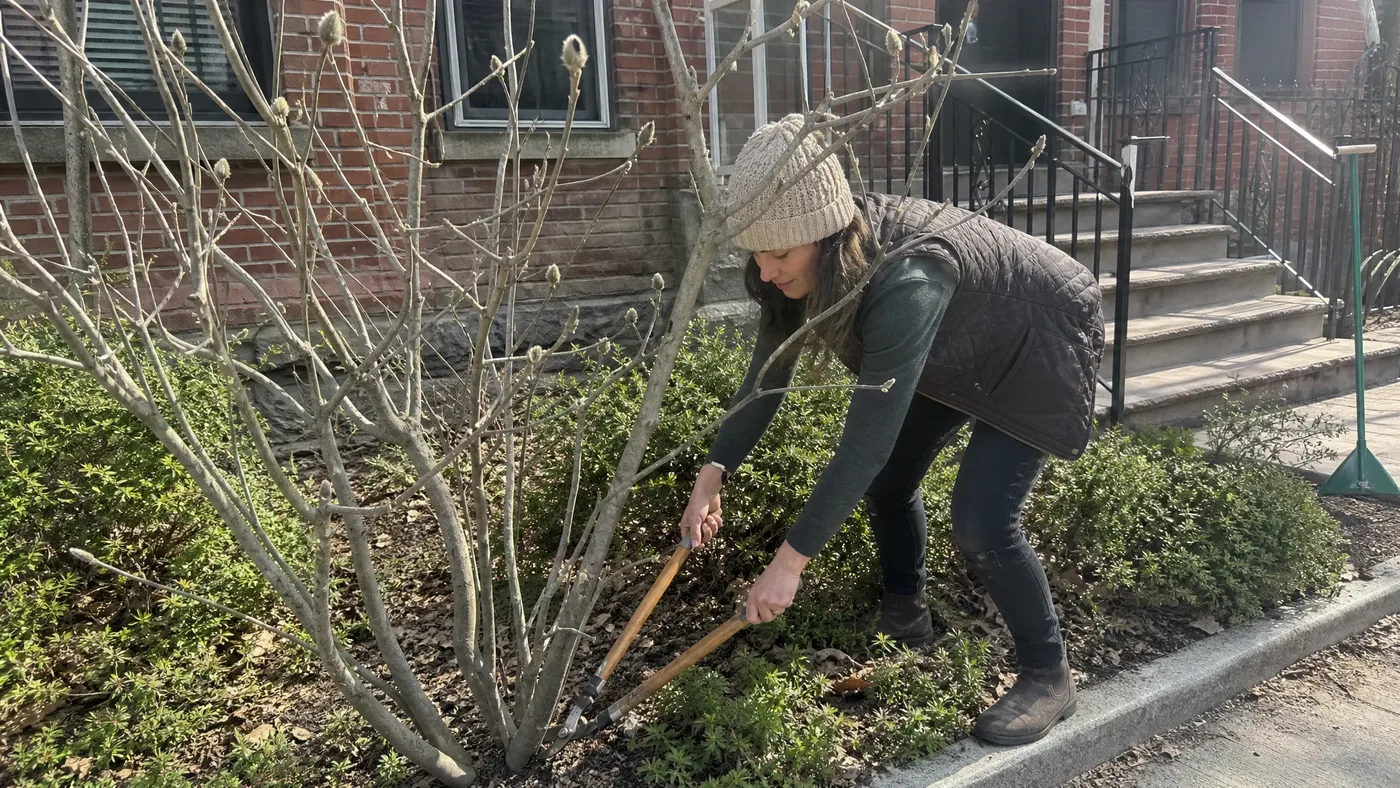
Common advice says magnolias need no pruning at all. That holds for a shrub, but a trunk exists only because you cut, and for the first several years you will be cutting. The work is steady rather than heavy, and a slow grower forgives a patient pace.
Selecting the Leader
Pick the straightest, most upright stem near the center of the plant, with a sound union at the base. Tie a ribbon on it so you do not lose track of it later. Look for a stem that sits above the others rather than leaning out from the side.
Removing Competing Stems
Work in summer after the flowers finish, and take the plant down in stages.
- Remove the lowest competing stems first, cutting each at the point where it joins the plant instead of leaving a stub.
- Shorten any stem that rivals the leader high up, then remove it fully the following summer so the plant keeps its leaf area.
- Raise the lower side branches on the trunk gradually, keeping some foliage low on the stem while it thickens.
- Remove new shoots at the base every summer from then on.
- Stake the leader only if it leans, and take the stake off once it stands on its own.
In our rows, the best trunks come from plants where the leader was chosen early and everything else came off gradually. The worst come from a single heavy cut that removed half the plant in one season.
Our method is staged removal over several summers, not a single sweep. For pruning tools and cut placement in general, see our guide on how and when to prune Jane.
Planning the Pruning Calendar and Cost
The real cost of either form is attention, with money coming second. The table lays out the effort year by year across a decade.
| Period | Multi-stem | Single trunk |
|---|---|---|
| Year 1 | Plant, mulch and water, with no pruning | Choose and mark the leader, remove the lowest rival stems |
| Years 2–3 | Remove dead or broken wood only | Finish removing rivals, raise low branches in stages |
| Years 4–5 | Thin a crowded stem if needed | Remove base shoots, check trunk taper |
| Years 6–10 | Light shaping after bloom | Base shoots and any low growth, one visit a year |
Timing the Cuts
Advice differs slightly. Jane should be pruned sparingly, after flowering, while deciduous magnolias should only be pruned between midsummer and early autumn. Summer, once the blooms are done, satisfies both, so that is when we schedule the visit.
Where the Money Goes
A multi-stem plant needs hand pruners and a small saw, sharpened once a year. A trunk needs the same tools plus a few stakes and ties. The larger expense for a trunk is the purchase price of a plant already trained, or the years of effort if you train it yourself.
Our schedule is one summer visit per year after the bloom ends, with the task list matching the table row for your form.
Settling on Your Jane Magnolia Form
Match the form to the job. Choose multi-stem for a border, a screen or a bed beside the house, and keep the natural habit. Choose a trunk where you walk beneath the plant, and decide whether you are paying for a trained plant or training your own over several summers.
Your plan for the next five years: plant and water through year one, make your first summer cuts after the bloom, and by year five either leave the stems alone or keep the base clear of shoots on your trunk.
Jane Magnolia
Nursery-grown Jane Magnolia in sizes from 1 Gallon 1-2 Feet Multi Stem, shipped to your door.
From $80.55
Shop Now →Jane gets full sun on our farms, with a few weeks of tending after the cold to clear damaged wood and keep the base tidy. We only ship plants we would plant ourselves, and every shrub or tree we send out is top quality. Whichever form you have settled on, see the Janes we have ready and choose one for your own garden.