Are Jane Magnolia Roots Invasive? What to Know Before You Plant
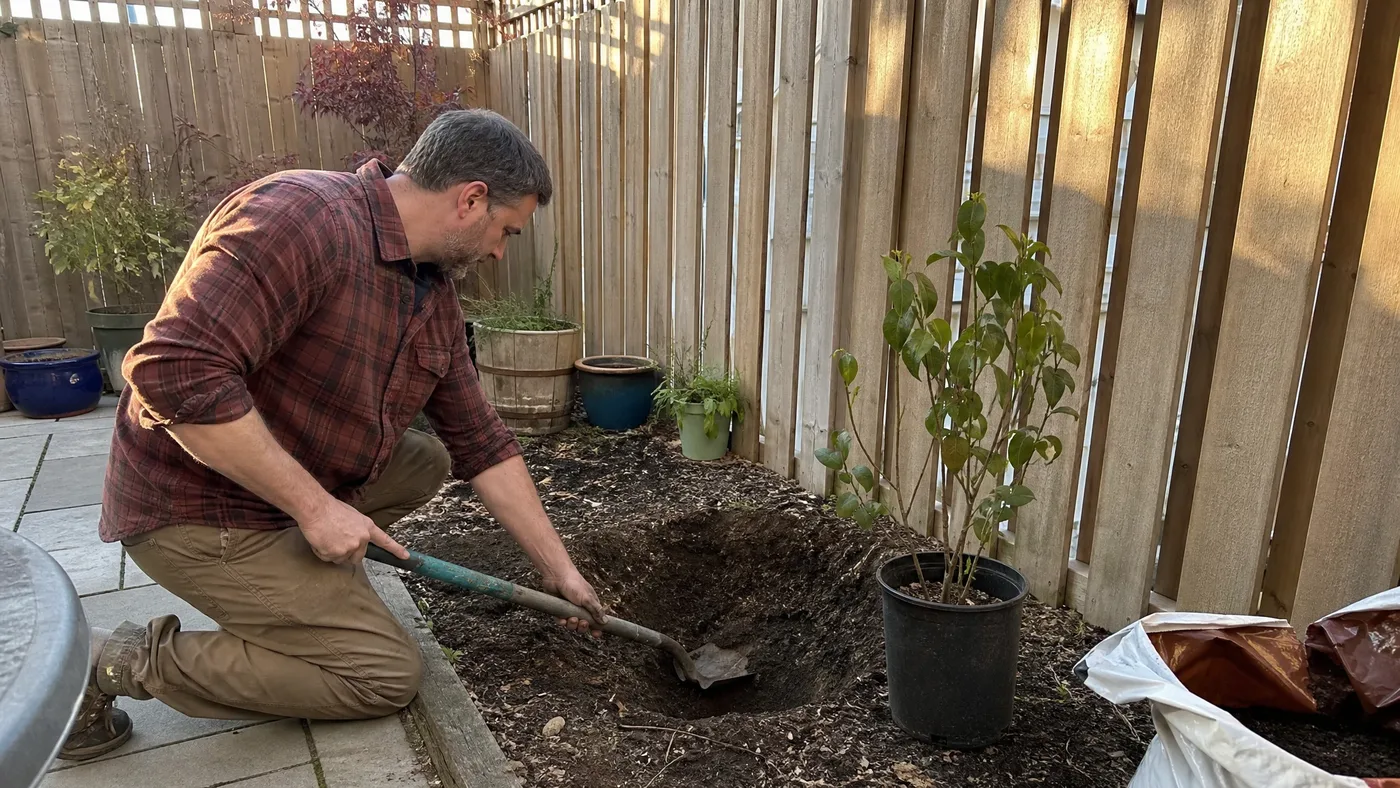
Lift a young Jane magnolia out of its pot, or dig a test hole beside an established one, and your spade will not find a taproot. It meets a mat of fleshy, pale roots lying close to the surface, thick as pencils and soft enough to dent with a thumbnail. That surprises most people, and it usually leads to one worry: is a root system like that a threat to the house, the driveway or the septic field?
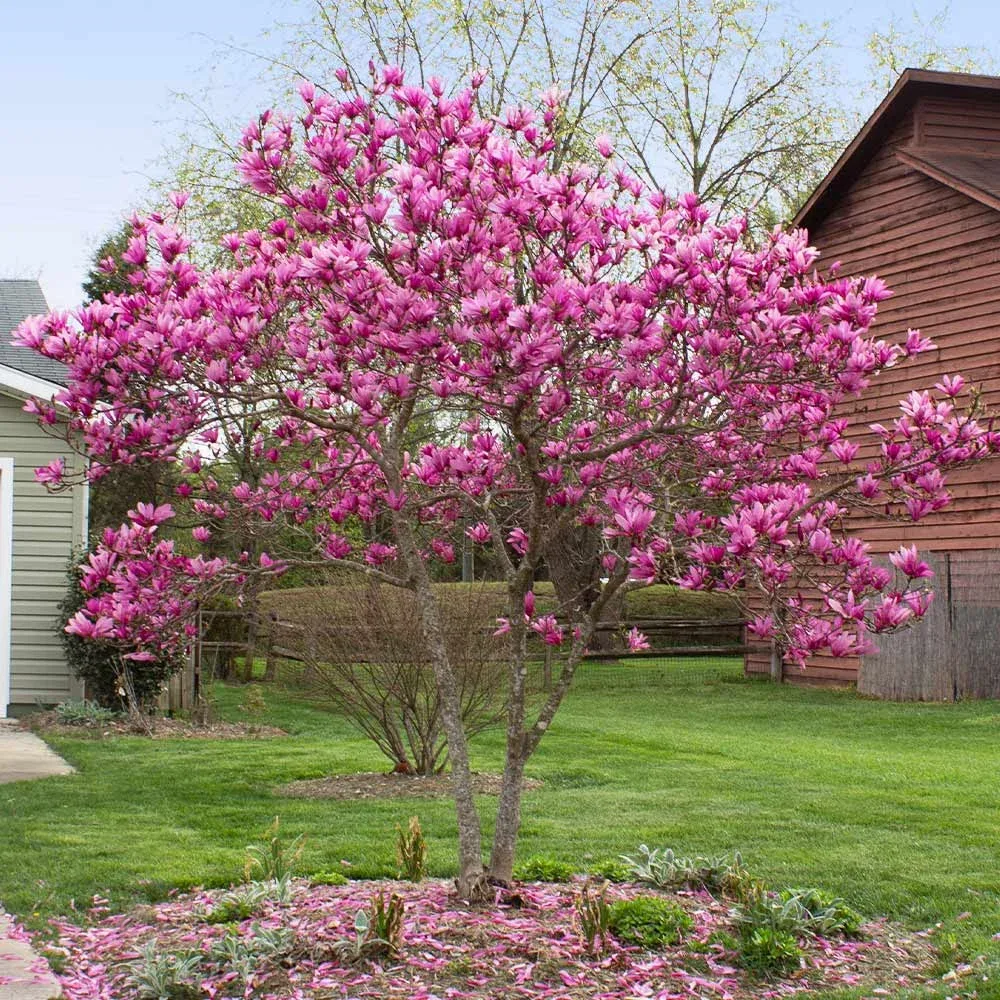
The worry is reasonable, but it points at the wrong thing. Jane is a small tree, 10–15 feet tall and 8–12 feet wide, and its roots are built to match that scale. When they cause trouble, the cause is usually a poor planting spot, not an aggressive plant. The tree gives back a late, scented spring bloom that rewards a spot near a window or path.
In this article, we'll go through how the roots are built, how far they spread, what they do near foundations, pavement and septic lines, how to read your soil, and the planting distances we use.
How Jane Magnolia Builds Its Root System
Jane is a cross between Magnolia liliflora 'Reflorescens' and Magnolia stellata 'Waterlily'. Neither parent is a forest giant, and Jane carries the same compact habit below ground. There is no deep taproot driving down to find water. Instead you get a spreading network of thick, soft roots in the top layer of soil, where air, moisture and decaying organic matter are richest, with only a few stronger roots to anchor the trunk.
Fleshy Roots Bruise and Tear
Jane has roots that are fleshy and easily damaged, and moving the plant once it is established is not advised. Fleshy roots lack the tough, wiry skin of a maple or privet root.
A shovel cuts through them, but they do not seal well, and a torn root can become an entry point for rot. Treat the ground under the branches as a no-dig zone, and you avoid most root problems before they start.
Why Recovery Takes so Long
Jane is slow-growing, and the roots keep the same unhurried pace. A fast willow can rebuild a damaged root system in a season or two. Jane cannot, so a root cut for a trench, a new edging line or a pavement repair can set the whole tree back for years. You will often see it as thin leaves, a lighter flower show, or a year with no new growth at all.
If you truly have to relocate one, read our guide to transplanting an established Jane magnolia first, and plan the move for a time when the tree is dormant. Better still, choose the site once and leave it.
Fleshy Roots That Spread Wide, Not Deep
Because the roots stay shallow, they find what they need by traveling sideways. Plan on the root zone reaching at least to the edge of the canopy, which at maturity is 8–12 feet across, and treat anything past that line as possible reach.
We do not have a measured root radius for Jane, so use the canopy as your working guide and check with your local extension service if the site is tight. The mat is wide and thin, not a deep plug, and that shape explains two things: why Jane settles into a modest hole easily, and why it hates digging nearby.
Wide and shallow does not mean invasive. The University of Florida's profile of 'Waterlily', one of Jane's parents, lists star magnolia as not known to be invasive and rates its roots as usually not a problem. Jane does not run underground, throw suckers across the lawn or crowd out neighbors. It claims a patch of soil and holds it, and it does that slowly.
Habits That Protect the Root Mat
What matters is what you do over that patch. These habits keep the roots intact:
- Keep the ground under the branches mulched instead of planted with turf, since regular mulching of the root zone helps keep the soil moist.
- Do not rototill, trench or edge a bed deeply inside the canopy line.
- Plant anything new under the branches with a hand trowel only, or place it beyond the branch spread.
- Keep heavy foot traffic, parked equipment and stacked materials off the root zone, because compacted soil starves shallow roots.
A wide, shallow mat is gentle on everything around it and hard on itself.
What Jane Magnolia Roots Do Near a Foundation
One of the most common questions we get is whether Jane can go against the house. In most cases it can. Planting along a foundation is a common use for this plant, and the University of Washington's Plant Answer Line, citing SelecTree, notes that most magnolias have a low root damage potential. A small tree with soft, shallow roots has very little force to push on a footing.
The same source makes a second point worth keeping in mind: most tree roots that harm foundations are exploiting preexisting weak points, not cracking sound concrete on their own.
So the useful question is not how far the roots go but whether your foundation or drainage has a flaw for them to find. A hairline crack, a leaking drain tile or a broken downspout joint can draw roots from any tree, large or small.
Where Moisture Changes the Picture
Jane likes steady moisture, so its roots will favor wet ground. Do not plant where a downspout empties or beside a pipe that weeps. A regular watering routine and a layer of mulch keep the roots content where you put them, and our watering guide covers how to set that up. A tree that never goes thirsty has no reason to wander toward your house.
Why the Old Distance Rule Overshoots
You will hear that a tree belongs as far from the house as it will grow tall. That rule was written for large shade trees. For a 10–15 foot magnolia it is overkill, and it pushes Jane out of the border where it looks best. Our size guide, How Big Does Jane Magnolia Get, explains why the canopy, more than the roots, sets your spacing.
Driveways, Paths and Septic Lines
Pavement is the easy case. Surface roots lift slabs when they turn thick and woody, and Jane's roots stay soft and slow. A path or driveway edge a few feet from the trunk is rarely at risk. The practical issue runs the other way: gravel base and the compacted soil under pavement are hard on roots, so the side of the tree facing the drive will usually grow fewer of them.
Paths and Driveways
Leave room between the trunk and the edge. That lets the roots spread into soft ground and keeps the branches clear of car doors and shoulders when the shrub fills out.
If an old path is already cracked, expect any shrub root to use the gap, and fix the path rather than blaming the plant. Edging a bed along a drive is fine, but cut it outside the drip line, not through the roots.
Septic Fields and Buried Pipes
This is where we are most cautious with every tree. A septic field is warm, damp and nutrient rich, which is exactly what a root looks for. Sound, tightly jointed pipe is a poor target. Old clay lines with loose joints and perforated field lines are a better one.
Do not plant over a field, and ask your county health office or septic installer for the setback that applies to your system. We will not give a number here, because it varies with local rules.
Before you dig anywhere near buried lines, call your local utility locator. Jane's roots are not the thing most likely to hit a pipe. Your spade is.
Reading Your Soil Before You Dig
Soil decides how the roots behave. Jane tolerates heavy clay, but tolerating clay is not the same as thriving in a bowl of standing water. In compacted or poorly drained soil, shallow roots stay shallower and run farther along the surface looking for air.
Star magnolia is also intolerant of root competition and dryness, according to the University of Florida, so a crowded, dry site stresses it from two directions.
Check the site before you plant, using this routine:
- Dig a hole as deep as the root ball you plan to plant.
- Fill it with water and let it drain, then fill it again and look at it the next morning. Water still standing means the spot needs a different location or a raised planting.
- Push a screwdriver into the soil around the hole. If it stops hard within a few inches, the ground is compacted and needs loosening over a wide area, not just in the hole.
- Look at the sides of the hole for a smooth, glazed wall. Break it up with a fork so roots can cross it.
Compaction is common beside new houses and drives, where heavy machines packed the ground. Loosen a wide patch instead of a deep pit, because roots that find only a pot-shaped hole tend to circle inside it.
For amendments and pH, our guide to the best soil for Jane magnolia goes into detail. Jane grows in both acid soil (below 6.0) and neutral soil (6.0–8.0), so you rarely need to chase a perfect number.
Planting Distances We Use for Jane Magnolia
What we tell customers is to use the mature width as a yardstick. At 8–12 feet wide, the canopy radius is 4–6 feet, and the roots should have at least that much soft ground around the trunk.
These are working numbers drawn from mature size, not measured root radii, so adjust them with your local extension office if you have unusual soil or a nearby septic system.
The table shows the distances we apply to common neighbors:
| Nearby feature | Trunk distance we use | Why |
|---|---|---|
| House foundation | About 6 feet | Half the 12-foot maximum width, so the canopy clears the wall |
| Driveway or path edge | 4–6 feet | Half the mature width gives roots soft ground |
| Another Jane | 8–12 feet | Matches the mature width so root zones barely overlap |
| Septic field or buried line | Outside the field and local setback | Ask your installer or county for the number |
Habits matter as much as distance. Set the top of the root ball level with the surrounding soil, spread the roots gently, and mulch the whole area under the branches while keeping the mulch off the trunk. Our guide on how to plant a Jane magnolia walks through each step.
Then leave the spot alone, because moving the tree later costs roots it cannot quickly replace.
What the Jane Magnolia Roots Add Up To
Jane's roots are fleshy, shallow and wide, and they recover slowly, which makes them easy to injure but not aggressive. Sources on the parent star magnolia and on magnolias in general point the same way: roots are usually not a problem and damage potential is low. Foundation trouble almost always starts with an existing flaw, and septic fields deserve the same caution you would give any tree.
So give the tree room, keep the soil open and evenly moist, and do not dig under the branches. Jane's roots are polite when given a measured distance.
Jane Magnolia
Nursery-grown Jane Magnolia in sizes from 1 Gallon 1-2 Feet Multi Stem, shipped to your door.
From $80.55
Shop Now →Jane sits in full sun in our rows, with space left between plants so the roots can spread without competing. We are a small grower-run business, and we only ship top-quality shrubs we would plant ourselves. Once you have a spot picked out with room to spare, see the plants we have ready.