How to Propagate Jane Magnolia from Cuttings and Layering
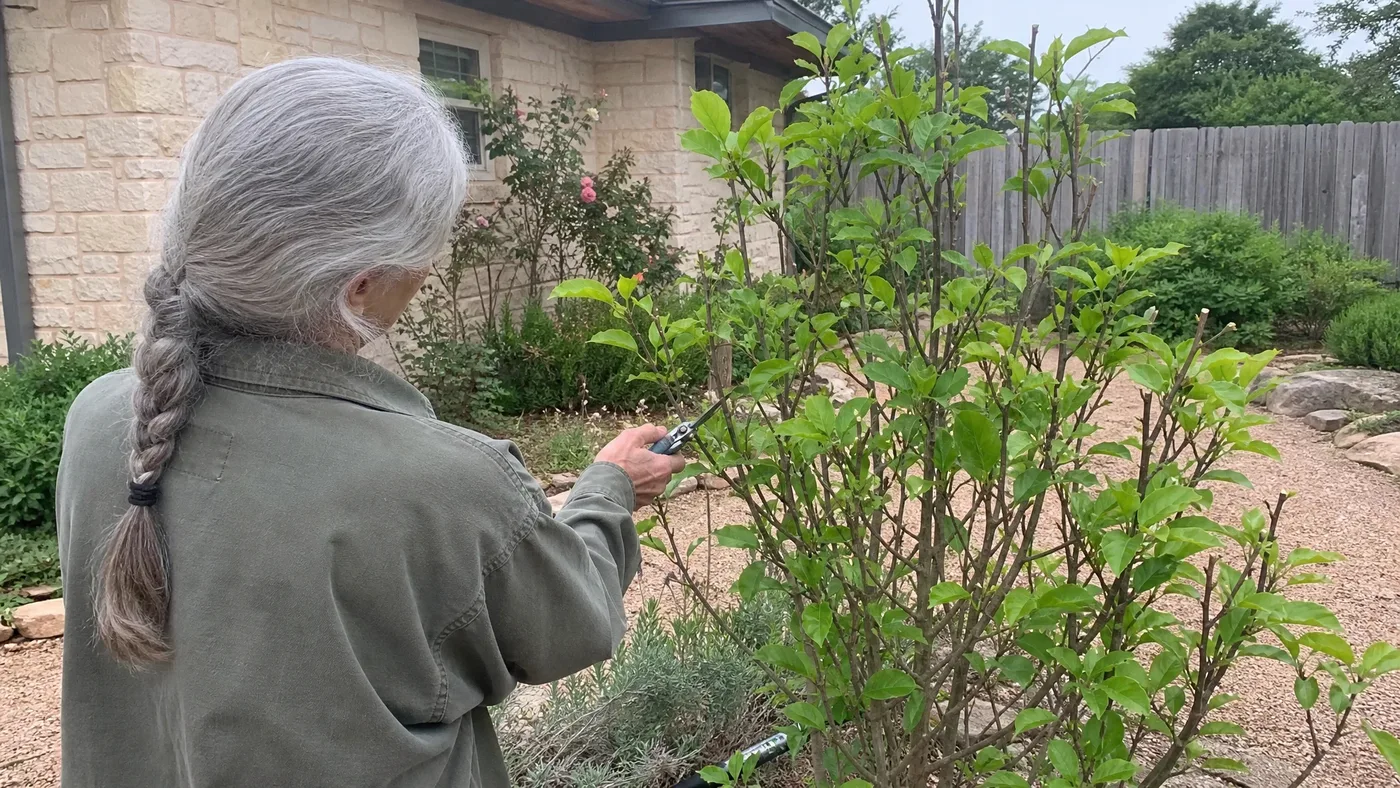
It is the week after Jane's last petals have dropped, and you are standing at the shrub with pruners in hand. Fresh shoots are pushing out where the flowers were, and a neighbor has just asked if they could have a start. You have read that magnolias are impossible to root.
We doubt the word. Much of what gets repeated sounds like one tray of rotted cuttings stretched into a rule, so we would rather ask what growers' results actually show.
Below, you'll find out all about copying Jane from your own plant, including how to pick and wound softwood cuttings, how to set up the rooting stage, how to layer a low branch, and how to pot on whatever survives.
Can You Really Copy Jane Magnolia at Home?
Yes, and it is no sure thing. Both halves of that answer are true, and the people shouting "impossible" and the people promising "easy" each leave one out. Jane is a cross between M. liliflora 'Reflorescens' and M. stellata 'Waterlily', so a cutting or a layer gives you the same plant while seed is a gamble.
Where does the "impossible" reputation come from? Mostly from cuttings that sat in wet mix until they rotted, which is a handling failure and not a verdict on the plant. A magnolia stem without enough air at its base goes black long before it makes a root. We often see careful people lose a whole tray this way, which is why the setup below leans so hard on drainage.
The real limits are different. Jane is slow-growing, so the wood is not abundant and a young copy takes its time. Magnolia grandiflora roots from almost-mature spring shoots, but that is southern magnolia, a very different tree. We borrow its stages and make no promises from it.
What we tell customers is to run both methods at once. Cuttings give several attempts from a little wood, and layering gives one slower, surer attempt. The rest of this guide treats them as a pair.
Choosing the Parent Jane Magnolia Wood
Start with the plant, not the pruners. Take wood only from a Jane that is growing well, with clean leaves and no crust of scale on the stems. Jane can suffer scale, thrips and weevils, plus leaf spots, anthracnose and powdery mildew, and a cutting carries every one of those straight into the new plant.
Timing the Cut After Bloom
The Little Girl Series, Jane included, flowers from mid-April to early May. The new growth you want arrives after the petals fall, so take cuttings then and not while the shrub is still in bloom. Our guide to Jane's bloom time covers how the window shifts with your weather.
Because the shrub should be pruned sparingly and only after flowering, treat your cuttings as part of that one tidy-up. Do not make extra cuts on a slow-growing plant just to fill a tray.
Reading the Shoot
Pick softwood from high on the plant. The University of Florida extension says most softwood cuttings come from shoots near the top, with the most recently formed leaves fully expanded. A shoot with leaves still unfurling wilts before it can root, and a shoot that is gray and woody has passed the moment.
Cut in the early morning, when the shoots of a well-watered plant hold the most water. If the weather has been dry, soak the shrub the day before. Carry the shoots away in a damp bag, out of the sun, and keep them there until you are ready to stick them.
Taking and Wounding the Cuttings
Work at a clean table the same morning you cut. Use a sharp blade wiped with alcohol, because a crushed stem rots first. A typical cutting is a single stem about 3 inches long, and that is the size we aim for with Jane.
The order of the steps matters more than your speed. Follow this sequence for each cutting:
- Cut just below a node, leaving about 3 inches of stem with the newest leaves at the top.
- Strip the leaves from the lowest inch, which is the part that goes into the mix.
- Trim any large leaf that remains so the cutting loses less water than it can replace.
- Scrape a thin sliver of bark from one side of the bottom inch, down to green tissue.
- Dip the wounded base in rooting hormone, tap off the excess and stick it right away.
Why Wound and Dust the Base
Wounding exposes the tissue under the bark where roots form, and it gives the hormone a wider surface to work on. Keep the scrape shallow. A deep gouge on a soft stem is an open invitation to rot.
Use a powder or gel made for softwood cuttings and follow the label for strength, since we have no Jane-specific figure to give you. Pour a little into a separate dish and discard what is left, so you never dip a fresh cutting into a tub that has touched wet stems.
Rooting Cuttings in Mix and Humidity
Fill clean pots or a deep tray with a light, fast-draining mix such as peat and perlite, and wet it thoroughly before you stick anything. It should feel like a wrung-out sponge, damp but not dripping. Poke a hole with a pencil first so the hormone is not scraped off, then firm the mix gently around the stem.
Humidity is the other half of the job. Slip a clear bag or dome over each pot, propped on a stick or two so the plastic never touches the leaves. Set it in bright shade, because direct sun under plastic cooks a cutting quickly.
Keeping It Moist Without Rot
Moisture is a balance, and the cutting tells you which way you are leaning. Use these habits through the rooting stage:
- Lift the cover for a few minutes every few days to swap the stale air for fresh.
- Remove any fallen or blackened leaf at once, since rot spreads from dead tissue to healthy stems.
- Water only when the top of the mix starts to dry, and never let the pot stand in a saucer of water.
- Hold off on tugging for the first weeks, because pulling a cutting to check it breaks the roots you are hoping for.
Expect a long wait. Customers usually ask us how long to leave a cutting alone, and our honest answer is longer than you want, with no firm number we would stand behind. Many cuttings sit green and unchanged for weeks. New growth at the tip is the sign to give one gentle tug, and resistance means roots.
Layering a Low Jane Magnolia Branch Instead
Layering roots a branch while it is still attached to the parent, so the shrub keeps feeding it water the whole time. That is why it is slower but surer than cuttings. A plant that spreads 8–12 feet wide, as Jane does, often has a limb that will reach the soil.
Bend, Wound and Peg
Do this after bloom, in the same window as your cuttings. Choose a flexible, healthy branch of recent growth, and handle it gently so it bends without cracking.
- Pick a branch that can touch the ground a little way back from its tip.
- Loosen the soil there and dig a shallow trench, mixing in a handful of the same light mix you use for cuttings.
- Scrape a patch of bark from the underside of the stem and dust the wound with rooting hormone.
- Lay the wounded section in the trench with the tip pointing up, pin it down with bent wire or a stone, and cover it.
- Tie the tip to a stake so it stands upright, and label the spot.
Waiting for the Roots
Keep that patch of ground moist all season. The advice in our guide to watering Jane Magnolia applies here just as it does to a new planting. Plan on a full growing season at the least before you check.
When the stem resists a gentle tug, roots have formed. Sever the layer from the parent, leave it in place a while longer so it can adjust, and only then lift it with a good ball of soil.
Weighing Success Rates Honestly
We will not give you a percentage. Plenty of pages do, but none that we found says how many cuttings, what climate, what mix or who counted. The sources we trust for Jane give growth and bloom facts, not rooting rates, so any number here would be invented.
What we can do is compare the two methods on things you can see for yourself.
| Factor | Softwood Cuttings | Layering |
|---|---|---|
| Wood needed | Several shoots from the top | One low, flexible branch |
| Attention | High: humidity, venting, rot checks | Low: keep the soil moist |
| Time to a plant | Many weeks of waiting | A full growing season or more |
| Odds on one try | Lower, so make several | Better, because the branch stays fed |
| Plants gained | Several, with luck | Usually one |
Our verdict is that cuttings are a numbers game and layering is a patience game. If you have one Jane and one chance, layer first and root cuttings as the side bet. And if you would rather skip the waiting, we grow Jane ourselves.
One habit we would drop is taking dozens of cuttings from one small shrub to improve the odds. Jane is slow-growing, and stripping a young plant to fill trays costs you more than it buys.
Hardening Off and Potting on Your Jane Magnolia Plants
We cover the two steps that take a rooted cutting from the propagation tray to a plant that can look after itself. First comes hardening off, where you ease the young plant out of its humid cover and into stronger light. After that comes potting on, with advice on containers, mix, watering and a sheltered first winter.
Hardening Off the Rooted Plants
A rooted cutting is still used to wet air. Prop the cover open a little more each day until the plant can sit uncovered all day without wilting. Then move it from bright shade into gradually stronger light, and watch the leaves for scorch or drooping.
Potting On
Wait until roots reach the drainage holes or fill the pot, then give each plant its own container only slightly larger than the old one. A free-draining mix matters more than a rich one. Jane grows in both acid (below 6.0) and neutral (6.0–8.0) soils, and our guide to soil, drainage and pH explains what to blend.
In our rows, the plants that struggle after potting are almost always the ones kept too wet, not too dry. Water when the top of the mix dries, and resist the urge to fuss over them.
Give young plants a sheltered spot through their first winter. Jane is hardy in zones 4a–8b, but that describes an established shrub, not a small rooted start, so check with your local extension service about winter protection. Our guide to growing Jane Magnolia in a container covers feeding, pot size and cold if you keep it potted for a season or two.
What Jane Magnolia Propagation Delivers
Cuttings deliver a handful of small, identical plants if you are lucky, at the cost of weeks of humid babysitting. Layering delivers one sturdier plant on a longer clock with little fuss. Choose cuttings when you have wood to spare and time to check trays, and choose layering when you have one low branch and one shot.
The wait does not end at roots. Jane is slow-growing, and our guide to how big Jane Magnolia gets shows why a copy takes seasons to look like the shrub it came from. Our candid view is that one rooted plant is a fair success, and everything beyond that is a bonus.
Jane Magnolia
Nursery-grown Jane Magnolia in sizes from 1 Gallon 1-2 Feet Multi Stem, shipped to your door.
From $80.55
Shop Now →Jane does best with six or more hours of sun, so that is where we put it, in the open rows of our own farms, and it handles heavy clay and heat there without complaint. Each tree and shrub we ship was raised in those same rows, never bought in. Once your cuttings or layers have had their time and you want a sturdy Jane to plant beside them, come see what we have grown.