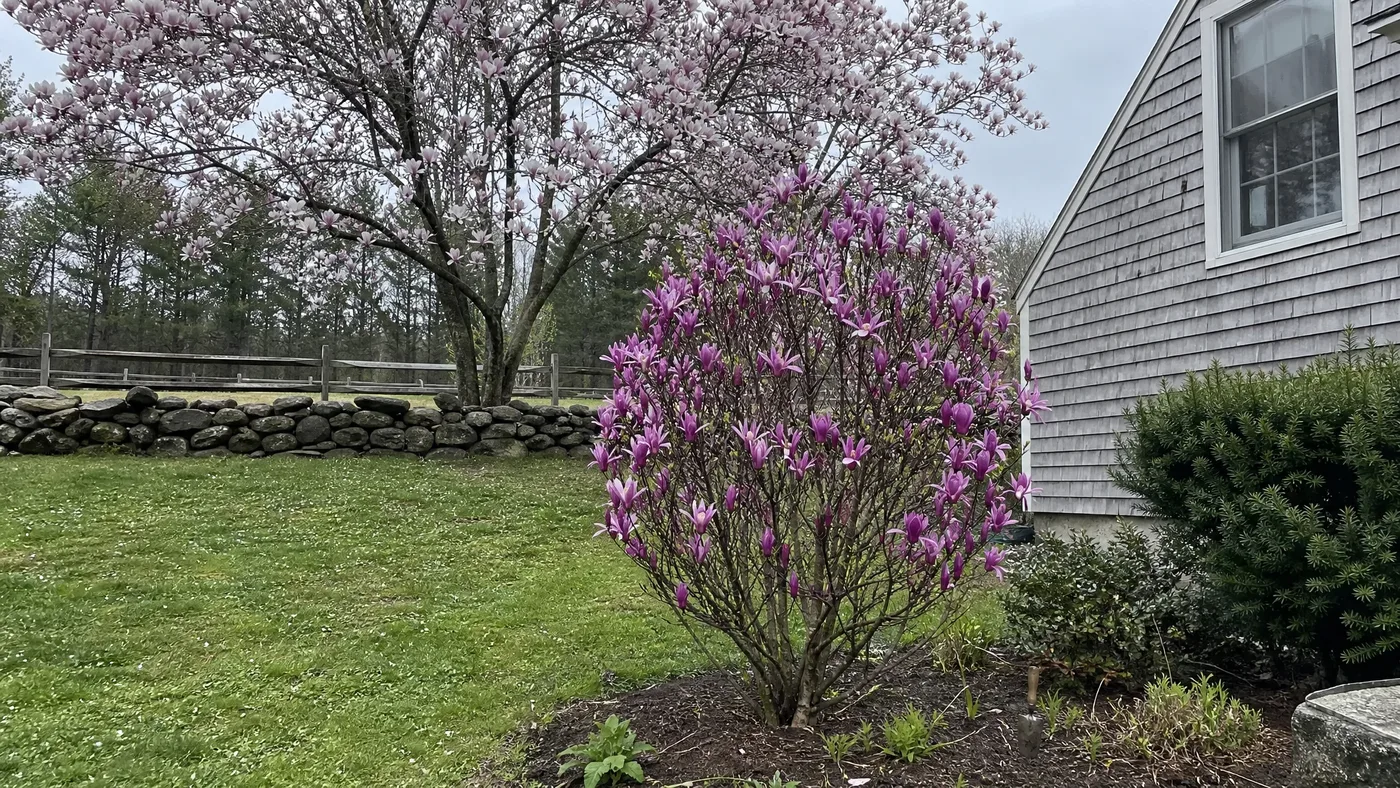
Jane Magnolia vs Saucer and Tulip Magnolia: What Sets It Apart
A shopper stands in the aisle holding a pot labeled "tulip magnolia" next to a printed photo of a tulip tree that towers over a house, and wonders why the two names point to such different plants.
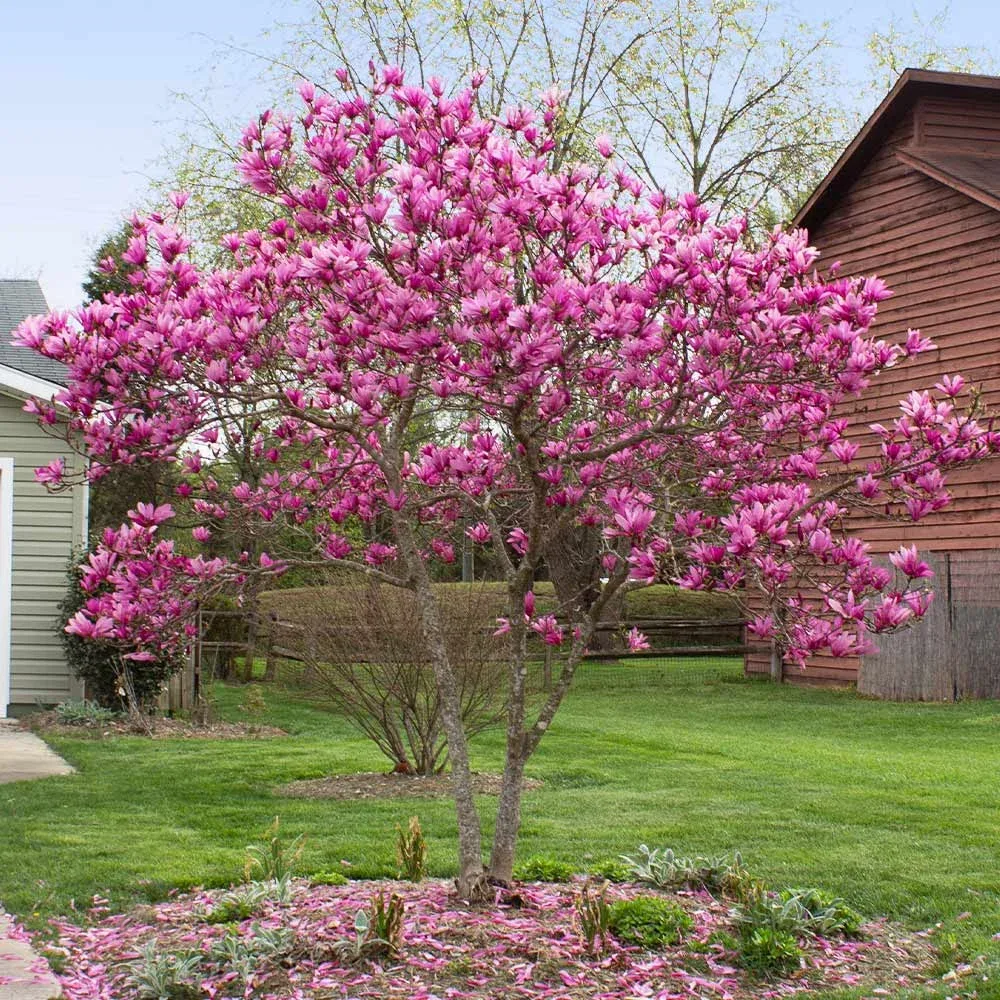
Many people assume a tulip magnolia, a saucer magnolia and a tulip tree are one tree under different labels. What we see instead is three distinct plants, and the mix-up sends people home with a tree far bigger, or far earlier to bloom, than they planned for.
This article talks about how Jane Magnolia compares with the saucer magnolia and the tulip tree and answers the questions customers ask us most. Read on to learn what each plant really is, how size, bloom timing and summer rebloom separate them, and how to read a tag before you buy.
Three Plants Behind One Confusing Name
Common names in the magnolia world overlap, and that overlap is the root of the confusion. Magnolia 'Jane' is a named cultivar, a single selection propagated and sold under that name, and it stays near 15 feet tall. The saucer magnolia, Magnolia x soulangeana, is a hybrid group with many members. The tulip tree, Liriodendron tulipifera, belongs to a separate genus altogether.
Genus, Hybrid and Cultivar in Plain Terms
Plant names work in layers, much like a street address. The genus is the neighborhood (Magnolia or Liriodendron), the species or hybrid is the street, and the cultivar is the house number. Two plants in different neighborhoods differ in the ways that matter for size and habit, even when they share a family. Two houses on the same street can still look quite different, and that is where Jane comes in.
Why the Word "Tulip" Keeps Showing Up
"Tulip" appears in names because several of these plants have buds or flowers shaped like one. The tulip tree is named for its blooms, and magnolia buds are often cup-shaped too, so labels get loose. Ignore the common name on a tag and read the botanical name beneath it. Jane is the only one of the three that we grow, so we will be candid about where it wins and where another plant suits you better.
What Makes a Saucer Magnolia a Saucer
A saucer magnolia is a hybrid, and the "x" in Magnolia x soulangeana marks it as one. It is a hybrid cross between M. denudata and M. liliiflora. Because that cross has been repeated and selected many times, "saucer magnolia" names a group of related trees, not one fixed plant.
The Shape Behind the Name
The name comes from the flower. A saucer's bud is a tight, upright goblet, and as it opens the tepals spread wide and shallow, like a saucer set on the branch. Botanists say tepals because in magnolias the petals and sepals look alike. The tepals are white on the inside and pink-purple on the outside, opening in mid-spring before the leaves emerge.
What That Means in the Garden
Flowering before the leaves gives the saucer its famous look, a bare-branched tree covered in large blooms. It also leaves those blooms exposed. A warm spell can open them early, and a hard freeze after that can brown the tepals overnight. That timing risk is the first thing Jane changes. The saucer is also a large plant, which the size section below covers with numbers.
Where Jane Magnolia Departs From Its Parent Group
Jane is often filed under saucer-type magnolias, but its parentage is different. Cornell's woody plant database lists it as a cross between M. liliflora 'Reflorescens' and M. stellata 'Waterlily'. Other sources differ on Jane's parentage, so you may see other pairings online. The saucer magnolia shares the purple-flowered parent species but pairs it with M. denudata instead of the star magnolia.
One Shared Parent, One Different
Think of the saucer group as the larger family and Jane as a relative who shares one parent species with it. The other side of Jane's ancestry comes from the star magnolia, and the differences in size and bloom time that follow are what you notice in the garden. They are also why saucer magnolia advice does not transfer neatly to Jane.
Three Traits That Mark Jane
In practice three traits separate Jane from a typical saucer magnolia. It stays compact at 10 to 15 feet tall. It opens its flowers late, from mid-April to early May. And it may rebloom in summer. Each gets its own section below. Jane belongs to the Little Girl series, and our guide to the Little Girl hybrids compared covers how it differs from siblings like Ann, Betty and Susan.
The practical result is that you cannot assume what you know about saucer magnolias applies to Jane. A spacing rule built for a tree 25 feet wide is wrong for a plant that tops out near 12 feet wide.
The Tulip Tree Is a Different Genus Entirely
The tulip tree is not a magnolia in the botanical sense. It is Liriodendron tulipifera, a member of the magnolia family (Magnoliaceae) native to eastern North America. Family is the wide grouping and genus is the narrow one. Sharing a family makes the tulip tree a distant relative of Jane, not a sibling.
Leaves and Flowers
Magnolia leaves are simple and unlobed. Tulip tree leaves are lobed with a squared-off tip that gives them an outline you learn to spot from across a yard. The flowers differ too. Tulip tree blooms are greenish yellow with orange markings and sit among the leaves in a tall crown, often out of sight. Jane's blooms open on a small tree, where you can see them from the ground.
Scale Settles It
Then there is size. The tulip tree has been known to reach 200 feet in height with a trunk diameter of 8 to 10 feet. Jane tops out around 15 feet. A tulip tree planted where you meant to plant Jane will outgrow a house and a lot line.
If the pot says Liriodendron, it is a big shade tree for a big property. If it says Magnolia 'Jane', it is the small ornamental this guide is about. People who search for a pink tulip tree usually have a magnolia in mind, since the tulip tree's own flowers are not pink.
Jane Magnolia Size Beside a Full Saucer Magnolia
Size is the clearest dividing line. Jane grows 10 to 15 feet tall and 8 to 12 feet wide, and Cornell's figure of 15 feet by 12 feet matches the top of that range. It is also slow-growing. A saucer magnolia reaches 15 to 33 feet tall and 15 to 25 feet wide. The table puts all three plants side by side.
| Plant | Mature height | Width or trunk |
|---|---|---|
| Jane Magnolia | 10–15 feet | 8–12 feet wide |
| Saucer magnolia | 15–33 feet | 15–25 feet wide |
| Tulip tree | Known to reach 200 feet | Trunk 8–10 feet across |
A saucer at the top of its range is more than twice as tall as Jane at its top, and about twice as wide. That is the difference between a tree that sits beside a patio and one that needs a corner of the lot to itself. One of the most common questions we get is whether a saucer magnolia bought for a small front yard will stay small. Usually it will not.
Where Each Size Fits
For a small front yard, a courtyard or a spot near the house, Jane is our choice. Its slow growth keeps pruning light, and pruning sparingly is advised. If you own open land and want a large spring display, a saucer magnolia earns its space. For growth rates and timelines, see our guide on how big Jane Magnolia gets and how fast it grows.
Why Jane Magnolia Blooms Later Than Its Look-Alikes
Jane's flowers open from mid-April to early May, which makes it a late bloomer. The Little Girl series blooms about two to four weeks later than its parent species. A saucer magnolia opens in mid-spring before its leaves emerge, and in a mild year that can mean open flowers weeks before the last frost has passed.
How Late Bloom Protects the Flowers
The logic is simple. An open flower is far more vulnerable to freezing than a tight bud, and every week a plant waits to open is a week fewer in which a cold night can arrive. Jane's schedule trades a head start for safety, so more of its flowers are still unmarked when they open. That is why Jane deserves a first look in frost-prone areas.
What Late Does Not Mean
Later is not frost-proof. A freeze in late April can still catch open flowers, and the dates above are a range, not a promise. Jane is listed for zones 4a to 8b, so check with your local extension service for your area's last-frost date. Our bloom time guide covers flower color and duration, and if a year passes with no flowers at all, the blooming troubleshooting guide walks through the causes.
Rebloom: Something Only Jane Magnolia Does
After its main spring show, Jane may flower again. The flowers occasionally rebloom in mid-summer, and Jane may rebloom from time to time after its initial mid-spring show. That summer habit is part of Jane's description in a way it is not in the saucer magnolia and tulip tree sources we rely on.
Telling Spring Flowers From Summer Ones
The two flowerings look different. In spring the branches are bare or just starting to leaf, and the flowers come in a dense crowd. In midsummer the tree is in full leaf, and any new flowers appear scattered among the foliage, a few at a time. A flower on a leafy magnolia in July is rebloom. A full bloom on bare wood in March belongs to an earlier plant than Jane.
Setting Honest Expectations
Treat rebloom as a bonus, never as the reason to buy. The sources say occasionally and may, and a plant can skip a summer entirely. In our rows, the summer flowers are a few scattered blooms, never a second flush. Prune only after flowering and only sparingly, as advised, so you are not cutting off buds that could open later.
Reading a Plant Tag Without Being Fooled
A tag is a short document, and every line either confirms a plant or rules it out. Read it in a fixed order and stop at the first line that does not match. The steps below work for a pot at a nursery, an online listing or a label in a friend's yard.
- Read the botanical name first. Magnolia 'Jane', with the name in single quotes, is the cultivar. Liriodendron means a tulip tree, and Magnolia x soulangeana means a saucer magnolia, even when "tulip magnolia" is printed larger.
- Check the mature size. Jane is listed at 10 to 15 feet tall and 8 to 12 feet wide. A range running to 33 feet describes a saucer, and a tag that mentions a very tall forest tree describes a tulip tree.
- Check the bloom timing. Mid-April to early May points to Jane. Flowers on bare branches in early spring point to an earlier bloomer.
- Look for a rebloom note. "May rebloom in summer" is an unusual line and a good sign.
- Match the zone to yours. Jane is listed for zones 4a to 8b.
If a tag gives only a common name, ask for the botanical name before you buy. Once the name checks out, our guide to buying a Jane Magnolia and what to look for covers what a healthy plant looks like.
Choosing Jane Magnolia Over Its Look-Alikes
Our recommendation is plain. Choose Jane if you have a small yard, a frost-prone spring, or simply want a magnolia you can reach and prune lightly. Choose a saucer magnolia only if you have room for a tree up to 25 feet wide and can accept the frost risk of early flowers. Choose a tulip tree only for a large property that wants a big shade tree.
If the tag mentions a compact size, a late bloom and a little summer rebloom, it is Jane.
Jane Magnolia
Nursery-grown Jane Magnolia in sizes from 1 Gallon 1-2 Feet Multi Stem, shipped to your door.
From $80.55
Shop Now →Jane is a magnolia that earns its place in a smaller garden, and that is how we raise it: in full sun on our own farms, where it does well. We are a small team of growers putting top-quality trees and shrubs into every pot we ship. If this guide has helped you settle on Jane, choose the one you want for your own garden from our shop.