Why Isn't My Jane Magnolia Blooming? Troubleshooting Guide
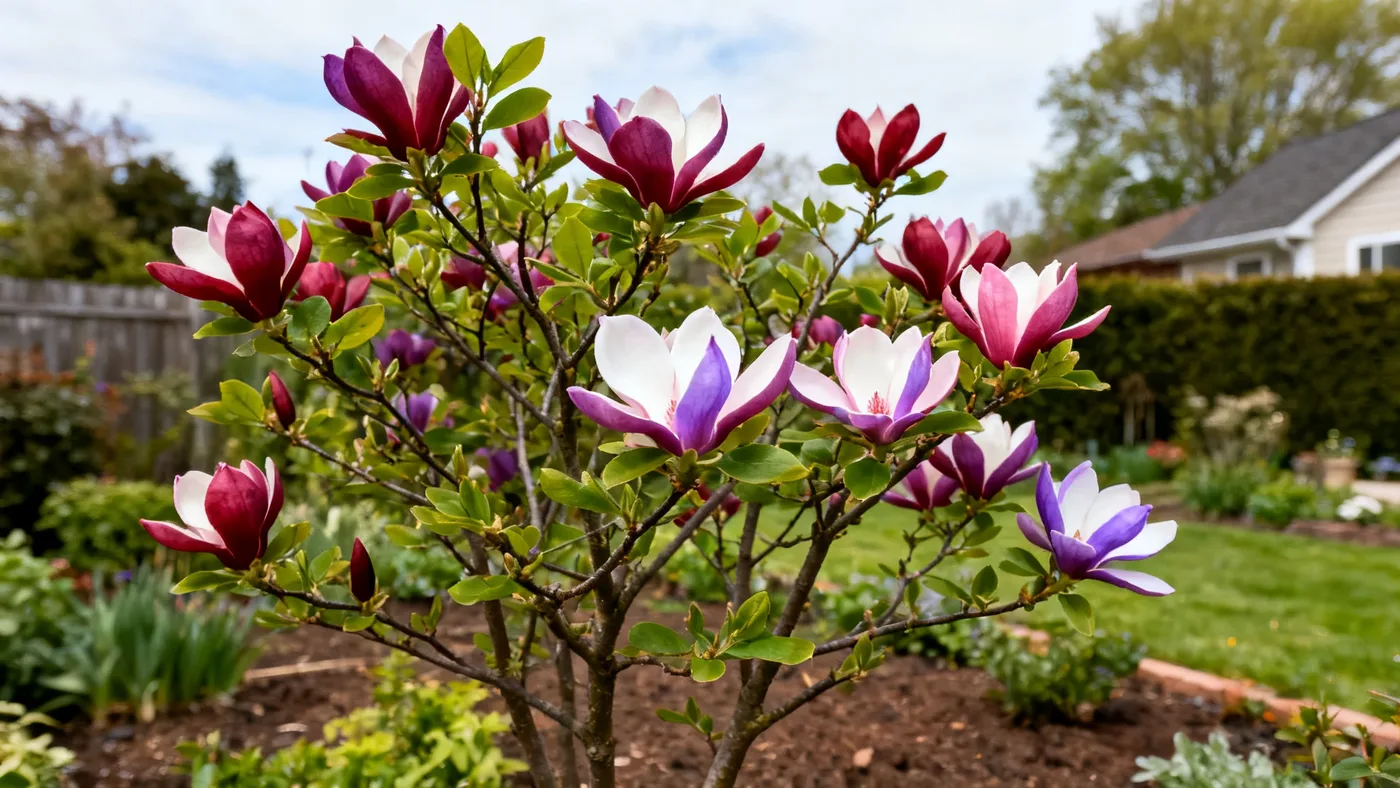
A Jane Magnolia (Magnolia 'Jane') in bloom is a showstopper: reddish-purple flowers on bare branches in mid-to-late spring, opening to reveal white and pale pink interiors. But sometimes that display never arrives. If your Jane Magnolia is healthy otherwise but producing no flowers, a few specific issues are usually to blame. This guide walks you through diagnosing why your jane magnolia not blooming and how to fix it.
When Should Your Jane Magnolia Flower?
Nursery-grown Jane Magnolias can flower within 1 to 3 years of planting. If your plant is younger than that, dormancy is normal, not a problem. Plants that are older but have never bloomed need investigation into the underlying causes below.
Expect blooms in mid-to-late spring in zones 4 to 8. The later timing compared to other magnolia species helps Jane Magnolia dodge late frost damage, but spring freezes can still harm open flowers in some years.
Issue 1: Insufficient Light (Most Common)
Jane Magnolia needs full sun to produce its best flowering and densest form. Part shade is tolerated, but blooms will be sparse or absent.
How to diagnose light problems:
- Observe your magnolia's location at mid-day (around noon). Count how many hours of direct sunlight it receives daily between spring equinox and fall equinox. Aim for at least 6 hours of unobstructed sun.
- Check if nearby trees have grown taller since planting and now shade the plant in late morning or early afternoon.
- Note any buildings, fences, or structures casting shadows during the critical spring bloom window (March through May, depending on your zone).
- If your magnolia sits under tree canopy, even dappled light all day counts as part shade.
What to do:
Relocate the plant if possible. Jane Magnolias are best moved in early spring or early fall when they are dormant. Digging and replanting is labor intensive, so weigh whether the site truly lacks sufficient light before attempting a move. If relocation is not feasible, selective pruning of overhead branches on nearby trees can open the canopy without removing the tree entirely. Have an arborist assess the fit before cutting.
Expected result:
Improved flowering should appear within one growing season after the plant receives adequate light, though the first spring after relocation may still be sparse as the plant recovers from transplant stress.
Issue 2: Soil pH and Nutrient Problems
Jane Magnolia prefers slightly acidic to neutral soil with a pH between 5.5 and 6.5. Alkaline or high-pH soil can cause chlorosis, a yellowing of leaves that signals nutrient lockup and stress. Stressed plants redirect energy away from flowering.
How to diagnose soil problems:
- Observe leaf color in new growth. If younger leaves are yellow with green veins (a pattern called interveinal chlorosis) while older leaves are darker green, nutrient uptake is being blocked.
- Obtain a soil test through your local extension service. Testing typically costs $15 to $30 and returns pH, nutrient levels, and amendment recommendations specific to your soil type and region.
- If testing reveals pH above 6.5, your soil is too alkaline for optimal magnolia growth.
- Check whether you are using lawn fertilizers or amendments near the magnolia. These often raise soil pH over time.
What to do:
Apply a light annual feeding in early spring (late February to March in most zones) using a balanced, slow-release, acid-forming fertilizer formulated specifically for trees and shrubs. Do not over-fertilize, as excess nitrogen promotes foliage at the expense of flowers. If soil pH is above 6.8, consider adding sulfur at the rate recommended by your soil test to lower pH gradually. Sulfur amendments work slowly; expect results over 1 to 2 seasons.
Expected result:
Foliage color should improve within weeks of applying an acid-forming fertilizer. Flowering may resume the following spring as nutrient stress decreases.
Issue 3: Water Problems (Drought or Overwatering)
Jane Magnolia requires consistent, medium moisture and is not drought tolerant once established without supplemental water during dry spells. However, overwatering or standing water can rot roots and prevent blooming.
How to diagnose water problems:
- Press your finger or a soil probe 2 to 3 inches into the soil near the plant base. In the growing season (spring through early fall), soil should feel moist but not soggy. If it feels bone-dry, drought stress is likely. If it feels waterlogged or smells sour, drainage is poor.
- Inspect the area around the plant after rain or irrigation. Water should drain away within a few hours, not pool for days.
- Check for signs of root rot: dark, soft bark at the base of the stem, or a musty smell from the soil near the roots.
- Review your watering schedule. In zones 4 to 8, newly planted magnolias need water 2 to 3 times per week during the first growing season. Established plants need supplemental water only during dry spells (more than 1 week without rain).
What to do:
If soil is dry, water deeply (soaking to 6 to 8 inches) once weekly or whenever the top 2 inches of soil feel dry. If soil is waterlogged, improve drainage by amending the planting area with 2 to 3 inches of compost or well-drained mulch, or by creating a rain garden to divert surface runoff. In severe cases, relocate the plant to a site with better natural drainage or install a French drain to move water away from the root zone.
Expected result:
Correcting water stress can take most of a growing season. Blooming may not resume until the spring following the growing season in which drainage or watering is corrected.
Issue 4: Frost Damage to Flower Buds or Young Growth
Jane Magnolia's late bloom time (mid-to-late spring) helps it avoid late frosts, but in some years, unexpected hard freezes after buds have swollen or flowers have opened can kill the blooms. You may not see a flower that year.
How to diagnose frost damage:
- In late winter, examine the branch tips. Healthy flower buds appear as fuzzy, fat swellings on the branch. Frost-damaged buds are darkened, shriveled, or black at the tip.
- After a late spring freeze, look for blackened flowers or sudden leaf scorch on new growth. These are signs the freeze killed tender tissue.
- Check your local weather records for late freezes in the weeks before your magnolia would normally bloom. A hard frost (below 28°F / -2°C) in April or early May in zones 4 to 5 is a common culprit.
What to do:
Frost damage cannot be reversed that season. Prune away blackened buds or dead branch tips after the plant has leafed out fully (late spring or early summer). Do not prune earlier, as more cold can damage tender growth. Going forward, accept that some years will have light or no bloom due to late frost. This is normal and not a failure of care. There is no reliable way to prevent frost damage without protective structures like shade cloth, which often causes more problems than it solves.
Expected result:
Normal blooming should return the following spring unless another late freeze strikes during flower opening.
Issue 5: Pruning at the Wrong Time
This is a frequent mistake with magnolias. Jane Magnolia sets flower buds for next year on old wood very soon after this year's bloom ends (by early summer). If you prune in late summer, fall, or winter, you remove next year's flower buds.
How to diagnose pruning damage:
- If your magnolia has been pruned or trimmed between June and winter, and it then failed to bloom the following spring, pruning timing is the issue.
- Minimal pruning is needed on Jane Magnolia. If you have been pruning it annually for shape, that may be the root cause of no blooms.
- Check whether contractors or landscapers have pruned the plant without your awareness or direction.
What to do:
If pruning is necessary for shape or health, do it right after flowering (late spring, typically May). This gives the plant the rest of the growing season to set new flower buds for the next spring. In most cases, no pruning is needed at all. Jane Magnolia naturally develops an attractive, dense form without intervention.
Expected result:
If pruning was the cause, blooming should return within one year after you stop pruning or shift to pruning immediately after bloom.
Issue 6: Plant Dieback or Winter Damage
In zone 4, severe winter cold can cause dieback of branch tips or the entire plant in a very hard winter. Dieback stunts the plant and exhausts its energy on recovery rather than flowering.
How to diagnose winter damage:
- In early spring before growth starts, bend a small branch gently. If it snaps with a brittle break and shows brown or gray wood inside, that branch is dead. Living wood bends slightly and shows green tissue beneath the bark.
- If multiple branches are dead or the main stem has cracked bark, winter damage is likely.
- Check whether your magnolia is at the extreme northern edge of its range (zone 4). Plants at range limits are more prone to winter injury in hard years.
What to do:
Prune dead branches back to living wood in early spring. Make the cut just beyond a live bud or where the branch joins healthy wood below. Do not apply wound dressing or pruning sealer; the plant heals better with an open cut. In future winters, no special protection is typically needed in zones 5 to 8. In zone 4, mulch around the base to 3 to 4 inches and avoid pruning in fall (which can stimulate tender new growth that is frost-sensitive). Allow the plant two to three growing seasons to recover before expecting abundant bloom.
Expected result:
Healthy new growth should emerge from pruning cuts within weeks. Flowering may not resume for 1 to 2 years as the plant redirects energy to branch regrowth.
Materials and Conditions You May Need
- Soil pH test kit or extension service soil testing
- Balanced, slow-release, acid-forming fertilizer formulated for trees and shrubs
- Sulfur soil amendment (if pH adjustment is needed)
- Compost or well-draining mulch for soil amendment
- Pruning saw or lopers for removing dead branches
- Water source for deep watering during drought
- Soil probe or finger test for moisture checking
Tips and Common Mistakes
Tip: Jane Magnolia flowers on old wood. Do not expect blooms in the first 1 to 3 years after planting a nursery-grown plant. This is normal.
Mistake: Assuming yellow leaves mean the plant is dying. Yellowing is often chlorosis (nutrient lockup from high soil pH), which is fixable with the right soil amendments and fertilizer.
Tip: In late winter, the fuzzy flower buds visible on bare branches are a sign your plant is healthy and building next spring's blooms. This is positive.
Mistake: Over-fertilizing. More fertilizer does not equal more blooms. Use a light application in early spring only. Excess nitrogen pushes foliage at the expense of flowers.
Tip: If a late spring freeze is forecasted after your magnolia buds have swollen, there is nothing you can do. Frost damage to blooms is a natural risk in zone 4 and sometimes zones 5 to 6. It does not mean your care failed.
For comprehensive care guidance, refer to the complete Jane Magnolia care guide for every season. If you are diagnosing a newly planted Jane Magnolia, check how to plant a Jane Magnolia tree for best results to ensure the foundation is sound.
Quick Reference: Blooming Troubleshooting Checklist
| Problem | Signs to Look For | Fix | Timeline |
|---|---|---|---|
| Insufficient light | Plant in shade 4+ hours daily | Relocate or prune overhead canopy | 1 season after move |
| High soil pH | Yellow new leaves with green veins | Apply acid-forming fertilizer; test soil | 1-2 seasons |
| Drought stress | Dry soil 2-3 inches down | Water deeply weekly; mulch | 1 growing season |
| Poor drainage | Waterlogged soil; musty smell | Improve drainage; amend soil; consider relocation | 1-2 seasons |
| Frost damage to buds | Black or shriveled flower buds in late winter | Prune dead buds; no prevention method | Next spring |
| Wrong pruning timing | Pruned June-winter; no bloom next spring | Prune right after bloom only; minimize pruning | 1 year |
| Winter dieback | Snapped, brown branches in spring | Prune to living wood; protect in zone 4 | 2-3 years recovery |
| Plant too young | Tree is less than 1 year old | Wait; no action needed | 1-3 years |