Is Jane Magnolia a Messy Tree? Here's the Answer
"I love the look of it, but will my lawn be buried in petals, and is it worth all the raking?" That question comes up on nearly every call about Jane. It usually comes from someone who has just watched a neighbor's big magnolia blanket the ground. The short version is that Jane is one of the tidier magnolias you can plant, and the mess it does make is small and predictable.
This guide covers everything you need to know about Jane Magnolia mess, from the petals after bloom and the brown mush on patios to fall leaves, bud scales, sticky foliage and a one-pass cleanup routine. Handled badly, you get a slippery walkway or a sooty-looking shrub. Handled well, you get a few light cleanups a year and a fragrant spring show the rest of the time.
Petals on the Lawn After the Jane Magnolia Bloom
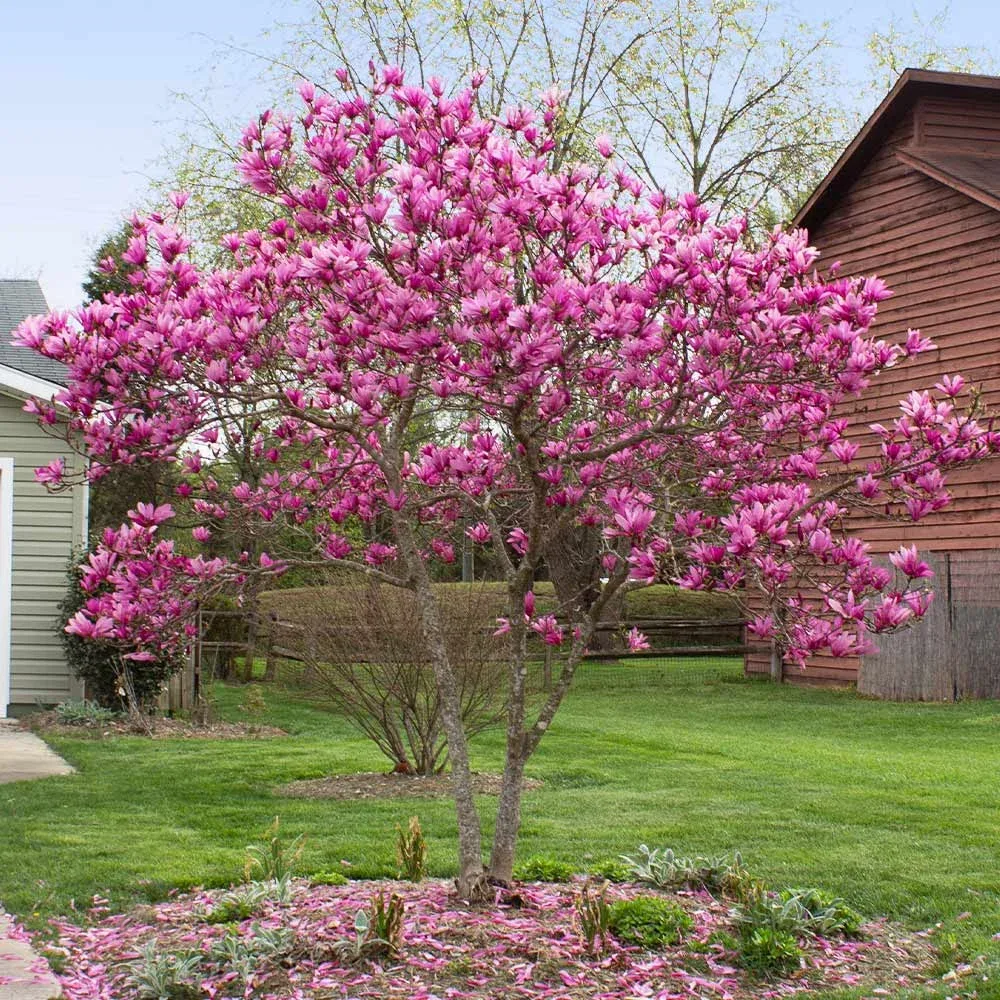
Jane opens its flowers from mid-April to early May, and the petal drop follows that same short schedule. Under the branches you will find a ring of fallen tepals on the grass or mulch, most of it inside the 8 to 12 feet the shrub spreads at maturity. On a mature plant that ring is modest, nothing like the drifts a big saucer magnolia leaves behind.
The reason is the flower itself. Each bloom is about 4 inches across and carries 10 narrow tepals, which are smaller and slimmer than the wide, fleshy petals on bigger saucer-type magnolias. They sift down into turf and mulch instead of lying in heavy sheets, so they blend in quickly.
Jane is also slow-growing, so the amount of litter stays about the same from year to year instead of ballooning as the plant ages. If you have only seen petals fall from a tall, old magnolia, a Jane is a much gentler experience.
Here is the whole year of mess in one place, so you can see how little of it there is.
| What drops | When | Where it lands | Effort |
|---|---|---|---|
| Petals (tepals) | Mid-April to early May | Under the canopy | One rake or blower pass |
| Bud scales and small twigs | Spring | In the mulch | None |
| Light second petal drop | Mid-summer, only if it reblooms | Under the canopy | Usually leave it |
| Leaves | Fall | Close to the base | One pass, or leave in beds |
Why Jane Magnolia Drops Petals All at Once
Jane is a cross between the 'Reflorescens' form of Magnolia liliflora and the 'Waterlily' form of Magnolia stellata, and it flowers late. The Little Girl Series, Jane's group, blooms about two to four weeks after its parent species. Everything opens in one compressed window, so everything ages together and finishes together. That is why the petals come down over days rather than weeks.
We would not call that a flaw. A shrub that held its flowers for two months would spend the second month looking brown and tired, and you would be raking all of it. A short, sharp display means a short, sharp cleanup, and for the rest of the year there is nothing to tend.
You will sometimes read advice to rake petals every day while a magnolia is in bloom. We do not follow that with Jane. Wait until the flowers are finished and clear the ground once. Our guide on Jane Magnolia bloom time and how long it lasts has the details on timing.
The flowers also occasionally rebloom in mid-summer, and that brings a second, much smaller drop. A handful of petals in July is easy to ignore. The spring show is still the one that decides how much cleanup you face.
Brown Mush on the Path and Patio
The petals themselves are rarely the problem. The trouble starts when they land on a wet walkway, patio or driveway and get stepped on, because they turn into a brown, slippery paste. On pale pavers or concrete they can leave a tan stain if you let them sit.
Rainy bloom weeks make it worse, since petals that would have dried and blown into the mulch stay stuck to stone instead. The surface most at risk is a smooth one right beside the shrub, like a front step or the edge of a patio. Textured stone and gravel hide the problem far better than polished tile.
The fix is quick. Sweep or blow the hard surface once the flowers are done, then rinse it with a hose before the residue dries. If a stain has already set, a stiff brush and a little soapy water usually lifts it. During bloom, a doormat at the nearest door catches the petals that get tracked inside.
Customers usually ask us whether the stain is permanent, and in our experience a prompt rinse prevents it. Treat wet petals like wet leaves underfoot. On a path you use daily, a quick sweep after each rainy day of bloom means you will not think about it again.
Leaf Litter Under a Multi-Stem Jane Magnolia
Jane is deciduous, so every leaf comes down in fall. The fall color is brown and copper with some gold and yellow, so the litter is a rust-and-gold scatter rather than a heavy green mat.
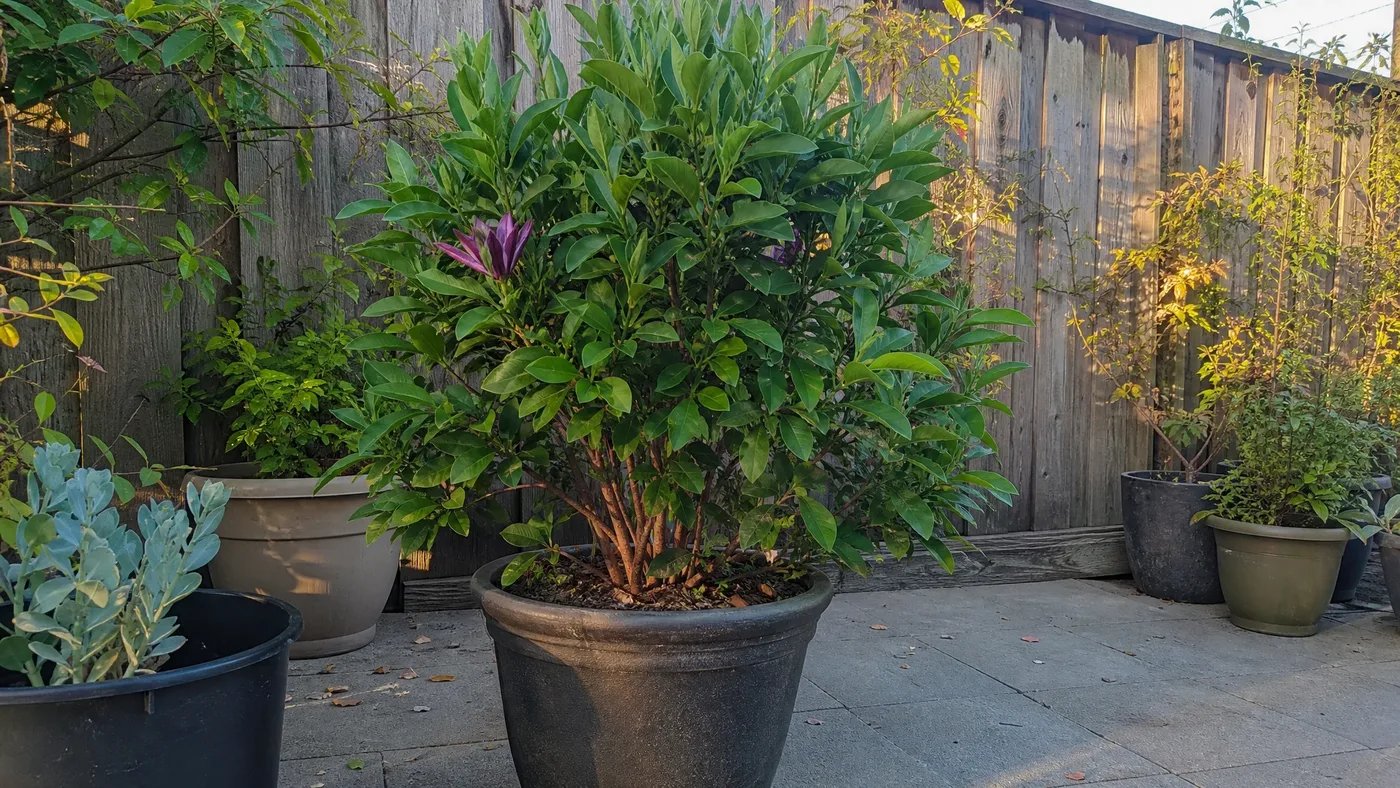
Here is where the multi-stem habit helps. Jane reaches 15 feet tall and 12 feet wide at most, and it branches low, so leaves fall in a tight skirt around the base instead of drifting across the yard. A single-trunk tree lifts its canopy higher and lets wind carry the leaves farther. Our guide to growing Jane as a tree or multi-stem shrub covers the tradeoffs.
In our rows, the leaves mostly stay under the shrub they came from, and one pass in late fall gets them all. That holds for a young plant too. Because Jane is slow-growing, the leaf volume builds gradually over many years.
You also have a choice about what to do with them. A rake or blower works, but leaves can stay in a planting bed under the shrub, where they break down into the mulch. Lift them only from lawn and hard surfaces, since a layer of leaves sitting on grass all winter will smother it.
Bud Scales and Twigs in the Mulch
Spring brings a different kind of litter that people often mistake for a problem. Jane's slender, deep red-purple buds are wrapped in scales, and as the buds swell and open, the scales loosen and drop. You will find small husks in the mulch right around the time the first flowers open.
Wind and spring storms also knock down a few little twigs, especially thin or dead ones. Neither needs action. The scales break down in the mulch, and the twigs can be picked up on the same pass as the petals.
Resist the urge to prune to cut down on this. Prune sparingly, only to remove dead or broken branches, and do any shaping after flowering. Our guide to pruning Jane Magnolia explains the timing, because cutting at the wrong moment costs you flowers, not just a little cleanup.
If a flower sets fruit, you may also see an aggregate of woody follicles with seeds in a fleshy red coating. It is easy to pick up and not something you need to manage.
Sticky Leaves and Sooty Film on Jane Magnolia
Sticky or dark leaves are the one kind of mess that tells you something is wrong with the plant, not just the calendar. Jane is usually tidy, but it can attract scale, thrips and weevils, and scale is the one that leaves a sticky trail. Check the shrub before you assume it is dirt or weather.
Where the Stickiness Comes From
Scale insects feed on sap and excrete a sugary honeydew that coats leaves, twigs and anything below. A dark, sooty film then grows on that honeydew. The film does not feed on the plant, but it tells you the pest is there, and it looks bad on glossy leaves.
Look for small bumps on the twigs and the undersides of leaves, and for ants climbing the stems. Our guide to the most common Jane Magnolia problems covers the other trouble you may run into.
What to Do About It
Start with a strong spray of water to knock off the honeydew and sooty film, which is often enough for a light case. For a real scale infestation, the right treatment depends on the species and the time of year, so ask your local extension service which product and timing suit your area. Once the pests are under control, the sooty film weathers away over time.
Cutting Cleanup Down to One Easy Pass
Most of the work comes down to how you set the ground up before anything falls. A little planning means you clean once after bloom and once in fall, and neither takes long.
A Simple Annual Routine
Here is the routine we suggest, in the order it happens through the year.
- Keep a layer of mulch under the canopy, so petals, scales and leaves land on something you can rake or blow instead of on bare soil.
- Wait until the bloom is finished in late April or early May, then clear petals and twigs from lawn and mulch in one pass with a leaf blower on low or a light rake.
- Sweep and rinse any hard surface after rainy bloom weeks, before the petals dry on.
- In late fall, once the leaves are down, make a single pass. Leave leaves in planting beds and lift them from lawn and paths.
- Rake lightly near the stems. The roots are fleshy and easily damaged, so skip digging, tilling and hard raking under the shrub.
Choose a Spot That Cleans Itself Up
Siting does as much as any tool. Set Jane with lawn or a mulched bed under its 8 to 12 foot spread, and keep it a few feet off the edge of a patio or entry walk so the petals fall on ground that does not stain. Because those roots resent being moved, choose the spot carefully the first time.
Living Easily With a Tidy Jane Magnolia
Jane is not mess free, because no deciduous shrub is, but its mess is small and tied to a short calendar. You get a quick petal fall in late April and early May, a leaf drop that stays close to the base, and a few bud scales and twigs you will hardly notice. If you are weighing it against bigger magnolias, our comparison of Jane with saucer and tulip magnolias lays out the other differences.
The only mess that deserves real attention is sticky, sooty foliage, which points to pests and gets handled as a plant problem. Everything else is a rake and a broom. Mulch the ground, plant it away from your doorstep, and a couple of short cleanups a year is all most owners ever do.
Jane Magnolia
Nursery-grown Jane Magnolia in sizes from 1 Gallon 1-2 Feet Multi Stem, shipped to your door.
From $80.55
Shop Now →Jane blooms late and keeps its mess small, and we raise it to match: in full sun and acid to neutral soil, out in the open rows of our own farms. Every plant we ship comes from those rows, grown by us as a top-quality shrub or small tree. If a tidy magnolia sounds right for your yard, come look through our shop when you are ready to plant.